Come find out at our concert on Saturday, April 11th at 3:00 p.m., where we’ll present classic works by 19th-21st century composers. This family-friendly concert will take place at Richard Montgomery High School in Rockville Md., Free admission!
Program
- 1. Scott Joplin/arr. Rozemond – Overture to Treemonisha
- 2. Samuel Barber – Adagio for Strings
- 3. Gary Daum – Psalm 9:11 (with NIH Community Choir)
- 4. Antonín Dvořák – Symphony No. 8 in G major, Op. 88, B 163
- 1. Treemonisha (arr: J. Rozemond)
Scott Joplin (c.1868-1917)
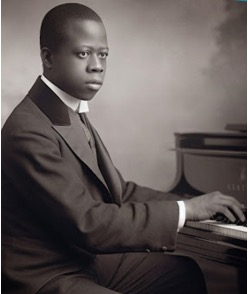
Scott Joplin’s birthplace of Sedalia, MO is central to the Joplin story and is the site of the annual Scott Joplin Ragtime Festival. While Sedalia was Scott Joplin’s home for only a few years, it was a home with a special meaning for him. When he was still a young child, Joplin’s family left the farm and moved to the newly established town of Texarkana, AR. Anecdotes relate that the young Scott Joplin gained access to a piano in a white-owned home where his mother worked, and taught himself the rudiments of music. Details reflected in Treemonisha, an opera that Joplin published in 1911, support this theory. Local German-born music teacher Julius Weiss took notice of Joplin’s talent and instructed him further by placing special emphasis on European art forms, including opera. Weiss’ influence may be the foundation of Joplin’s desire for recognition as a classical composer.
In 1896, it appears that he attended music classes at George R. Smith College in Sedalia and published two marches and a waltz. Late in 1898 he tried to publish his first two piano rags, but succeeded in selling only Original Rags. This publication experience was not satisfactory as he was forced to share credit with a staff arranger. Charles N. Daniels’ name was added as “arranger,“ and was cited as composer on the copyright and in some newspaper advertisements. Before Joplin published his next rag, he obtained the assistance and guidance of a young Sedalia lawyer, Robert Higdon. In August 1899 they contracted with Sedalia music store owner and publisher John Stark to publish the Maple Leaf Rag, which was to become the greatest and most famous of piano rags. The contract specified that Joplin would receive a one-cent royalty on each sale, a condition that provided Joplin a small but steady income for the rest of his life. Scott Joplin was the most sophisticated and tasteful ragtime composer of the era, but he aspired to more. His goal was to be a successful composer for the lyric stage and he continually worked toward this end. That he called himself “King of Ragtime Writers,” omitting a claim for his piano playing, reveals his recognition that not all of his music musical skills were on the same high level. He also played cornet and violin, but put little effort into developing himself on those instruments. He is reported to have had a fine singing voice, and performed at times as a singer. He also had perfect pitch and, on becoming proficient at music notation, composed away from the piano.
At the time of his death (1917), he was almost forgotten. In the 1940s, a group of jazz musicians seeking to revitalize their art with the spirit of the past included ragtime in their development of “traditional jazz.” The revival peaked in the 1970s as new recordings of Joplin’s music, produced for the first time on classical labels, set classical sales records. This quickly growing presence inspired George Roy Hill to use Joplin’s music in his film The Sting, which became immensely popular and brought Joplin to the notice of the general public.
Treemonisha was composed in 1911, but was virtually unknown until its first performance in 1972. Joplin was posthumously awarded the Pulitzer Prize for the opera in 1976. Historians have speculated that Joplin’s second wife, Freddie Alexander, may have inspired the opera. Like the title character, she was educated, well-read, and known to be a proponent of women’s rights and African-American culture. Joplin set the work in September 1884, the month and year of Alexander’s birth, which contributes to that theory. The story opens on a former slave plantation near Texarkana, Arkansas. A young enslaved woman named Priscilla flees with her newborn baby. Chased by her enslavers and desperate, she knocks on the doors of nearby houses for help to no avail. She places the baby inside a hollow tree, hiding a small bag of luck within the child’s clothing. Moments later, Priscilla is shot and killed. The infant is found and adopted by Monisha and Ned who name her Treemonisha and raise her as their own. Treemonisha is taught to read by a white woman, she leads her community against the influence of conjurers, who are shown as preying on ignorance and superstition. Treemonisha is abducted and is about to be thrown into a wasps’ nest when her friend Remus rescues her. The community realizes the value of education and the liability of their ignorance before choosing her as their teacher and leader. The overture concludes with the entrance of adult Treemonisha, twenty years later on her wedding day, sitting peacefully reading beneath the very tree where her mother left her with hopes for her survival.
2. Adagio for Strings, Op. 11
Samuel Barber (1910-1981)
Samuel Barber was born March 1910 in Pennsylvania. Barber was popularly known for his romantic and European compositions, which were mostly tonal. He wrote his first piece at age seven, followed by an opera attempt at ten. Thereafter, he studied voice, piano, composition, and conducting at Curtis Institute in Philadelphia, where he later taught briefly. At the age of 14 he entered the Curtis Institute, where he studied voice, piano, and composition. Later, he studied conducting with Fritz Reiner. At Curtis, Barber met Gian Carlo Menotti with whom he would form a lifelong personal and professional relationship. Menotti supplied libretti for Barber’s operas Vanessa (1956), for which Barber won the Pulitzer Prize, and A Hand of Bridge. Barber’s music was championed by a remarkable range of renowned artists, musicians, and conductors including Vladimir Horowitz, John Browning, Martha Graham, Arturo Toscanini, Dmitri Mitropoulos, Jennie Tourel, and Eleanor Steber.
He also studied in Rome in 1936 through a scholarship award from American Academy’s Prix de Rome. He was later elected to the American Academy of Arts and Letters. Barber garnered huge success in his work. His Anthony and Cleopatra was commissioned to open the new Metropolitan Opera House (New York City); and School of Scandal won him an award in 1933. His famed and dynamic masterpiece, Adagio for Strings (extracted from String Quartet, 1936), was played a couple of years later by NBC Symphony Orchestra conducted by the famous master Toscanini. His ballet scores are Medea and Souvenirs. In addition to the piano sonatas Ballade and Excursions, he composed violin, cello, flute, trumpet, and strings concerti. He arranged orchestral music (symphonies) as well as vocal and choral music such as Knoxville: Summer of 1915 (1947) for soprano and orchestra. He died in 1981.
Samuel Barber’s music, masterfully crafted and built on romantic structures and sensibilities, is at once lyrical, rhythmically complex, and harmonically rich. Barber was the recipient of numerous awards and prizes including the American Prix de Rome, two Pulitzers, and election to the American Academy of Arts and Letters.
Samuel Barber’s moving Adagio for Strings is one of the most popular and frequently programmed American compositions in the standard repertory. Elemental and beautiful, the Adagio has qualities that are rarely found together: a spacious, quintessentially American sound, but also a melancholy, ruminative mood that offers both insight and solace to the listener. The Adagio‘s long, flowing, deeply voiced melodic line remains a constant presence that is both elegiac and hopeful as it passes from one string choir to another — first in the violins and then, a fifth lower, in the violas. As the violas continue with their heartfelt voicing of the theme, it is taken up by the cellos and further developed, eventually building to a climax in which the basses underline it, adding a sense of depth and timelessness with their unique resonance. A fortissimo climax, like a cry from the heart, is followed by silence, leading to the restatement of the original motif, with an inversion of its second statement offering perhaps the possibility of healing and hope. Barber originally composed this work in 1936 as the second movement of his String Quartet, Op. 11. It seems likely that his life partner Gian Carlo Menotti, the phenomenally successful Italian-born opera composer with a sure sense of drama and popular appeal, was instrumental in its success; knowing that Barber had a potential hit on his hands, Menotti ensured that its manuscript would be seen and programmed by Arturo Toscanini when the reticent Barber was less sure of its appropriateness. Thus, it was premiered by the NBC Symphony Orchestra under Toscanini’s baton in 1938. The intensely lyrical Adagio for Strings has become one of his most recognizable and beloved compositions, both in concerts and films (“Platoon,” “The Elephant Man,” “El Norte,” “Lorenzo’s Oil”).
https://utahsymphony.org/explore/2020/09/barber-adagio-for-strings/
3. Psalm 9:11
Gary Daum (1954-2019)
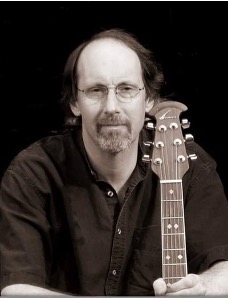
Gary Daum founded the NIHCO in 1996. Gary was born June 20, 1954 in Clarion, PA to the late Millard Lowell and Evelyn Rose (nee Rickenbrode) Daum. He attended Clarion High School, then obtained his bachelors degree in music education from Clarion University and his master’s degree in music composition from CUA and became the first full-time music teacher at Georgetown Prep since the 1800s.
Gary was honored by Georgetown Prep in October of 2014 with its prestigious Ed Joyce award, where Headmaster Jeffrey Jones praised his devotion, enthusiasm, and selflessness. Garys list of accomplishments included: founding (and chairing) the Music Department where he taught various courses and directed multiple ensembles, directing the schools musicals, teaching photography and leading the Photography Club, teaching Computer Science, and overseeing the student bookstore and Library/Media Center.
In concluding his presentation of the Joyce Award, Mr. Jones proclaimed that Gary’s “contributions to Prep and to our young men are enormous…Gary brings to Prep his passion for learning and his love of teaching. To see Gary at work is to see a man who cares deeply for his students, and who works tirelessly for them…Gary believes that every student has a sense of the beautiful, and he has helped countless students find their aesthetic vision…Gary Daum has dedicated his professional life to our students, and to Prep, and we are a better place for it.”
Gary Daum founded the NIHCO as an adjunct to his activities on the chaplain’s Sunday program at the NIH Clinical Center. It started as a sing-along of parts of The Messiah with string accompaniment, and eventually grew to a full Messiah sing-along at NIH’s Masur Auditorium. This continued until September 11, 2001, when all access to the NIH campus was cut off. Gary and the board worked tirelessly to find alternate sites for rehearsals and the orchestra concerts. Georgetown Prep provided that venue for many years, in exchange for the orchestra brass playing the faculty Christmas celebration and the Prep graduation. Gary wrote a memorial orchestra and vocal piece for 9/11 called Psalm 9:11. It was first performed by the NIHCO in June 2002 under the baton of Jesse Parker. It is dedicated to “To Jesse Parker and the NIH Community Orchestra; and to the unsung heroes who refuse to let hate destroy those things that are good” and has been performed on several occasions in Montgomery County. He also arranged several works by Handel and others for strings, brass, or full orchestra. He performed with other Prep staff and orchestra members at annual gatherings presenting pieces by Dylan, The Beatles, and a host of other artists.
Gary Daum passed away Feb. 2, 2019. At NIHCO’s March 2019 concert, the group performed in Gary’s memory Nimrod, from Edward Elgar’s Enigma Variations. It was composed with a friend in mind who often offered Elgar artistic guidance and encouragement. The movement is meant to evoke a warm conversation between longtime friends.
In Fall 2022, Gary’s widow Mary Daum inaugurated NIHCO’s Community Liaison role, preserving his legacy on our Board, and serving with distinction as a community-builder, including greeting concert patrons at our Welcome Table.
https://www.nytimes.com/2001/09/27/us/national-institutes-of-health-go-from-campus-to-fortress.html
4. Symphony No. 8 in G Major, Op. 88
Antonín Dvořák (1841-1904)
Dvořák was born, the first of nine children, in Nelahozeves, a Bohemian (now Czech) village on the Vltava River north of Prague. He came to know music early, in and about his father’s inn, and became an accomplished violinist as a youngster, contributing to the amateur music-making that accompanied the dances of the local couples. When he was about 12 years old, he moved to Zlonice to live with an aunt and uncle and began studying harmony, piano, and organ. He wrote his earliest works, polkas, during the three years he spent in Zlonice. In 1857 a perceptive music teacher, understanding that young Antonín had gone beyond his own modest abilities to teach him, persuaded his father to enroll him at the Institute for Church Music in Prague. The 1860s were trying years for Dvořák, who was hard-pressed for both time and the means, even paper and a piano, to compose. In later years he said he had little recollection of what he wrote in those days, but about 1864 two symphonies, an opera, chamber music, and numerous songs lay unheard in his desk. The varied works of this period show that his earlier leanings toward the music of Ludwig van Beethoven and Franz Schubert were becoming increasingly tinged with the influence of Richard Wagner and Franz Liszt. Dvořák and his wife, his former student Anna Čermáková, bought a summer house in the small village of Vysoká. Dvořák composed some of his best-known works there. In 1875 Dvořák was awarded a state grant by the Austrian government, and this award brought him into contact with Johannes Brahms, with whom he formed a close and fruitful friendship. Brahms not only gave him valuable technical advice but also found him an influential publisher in Fritz Simrock, and it was with his firm’s publication of the Moravian Duets (composed 1876) for soprano and contralto and the Slavonic Dances (1878) for piano duet that Dvořák first attracted worldwide attention to himself and to his country’s music. In 1884 he made the first of 10 visits to England, where the success of his works, especially his choral works, was a source of constant pride to him, although only the Stabat Mater (1877) and Te Deum (1892) continue to hold a position among the finer works of their kind. In 1890 he enjoyed a personal triumph in Moscow, where two concerts were arranged for him by his friend Pyotr Ilyich Tchaikovsky. The following year he was made an honorary doctor of music of the University of Cambridge. Dvořák accepted the post of director of the newly established National Conservatory of Music in New York in 1892, and, during his years in the United States, he traveled as far west as Iowa. Though he found much to interest and stimulate him in the New World environment, he soon came to miss his own country, and he returned to Bohemia in 1895. The final years of his life saw the composition of several string quartets and symphonic poems and his last three operas.
Dvořák composed his Symphony No. 8 during the period just before his time in America. The year was 1889; he had just been elected to the Bohemian Academy of Science, Literature and the Arts, and spent just a bit over two months — from the end of August to the beginning of November — writing a symphony to express his gratitude and pleasure in receiving this honor. He dedicated the score “To the Bohemian Academy of Emperor Franz Joseph for the Encouragement of Arts and Literature, in thanks for my election.” He conducted the premiere the following February in Prague.
In contrast with the stormy Romanticism of Dvořák’s previous symphony, No. 8 is bright and optimistic in tone, suffused with the lilt of his beloved Bohemia. The sounds of the countryside are never far from Dvořák’s music, but in this case — as the composer himself noted — the structure is “different from [my previous] symphonies, with the thoughts worked out in a new way.” The folk-like melodies come in abundance, especially in the first movement, which is structured almost like a rondo — with the initial theme repeated every time a new melodic idea comes along. Though all these ideas are meticulously crafted, there is an air of spontaneity about them. And of course — as in all Dvořák’s music — the dance rhythms are so prevalent that it’s all we can do to keep still as we listen. The second movement, an adagio, alternates (as does the first movement) between major and minor keys, though in both movements a warm glow prevails. These open onto a delicious waltz in the third movement, which in turn leads us to a dramatic final movement introduced by a brassy fanfare and culminating in a strong assertion of sheer goodness. It all sounds simple, but in music, as in life, nothing is more difficult than simplicity. Small wonder that this symphony, with its combination of bucolic cheer and beauty of craft, has been called Dvořák’s counterpart to Beethoven’s Symphony No. 6 (Pastoral).