We’ll explore the theme of “home” with classic works by American composers.
What does “home” mean to composers?
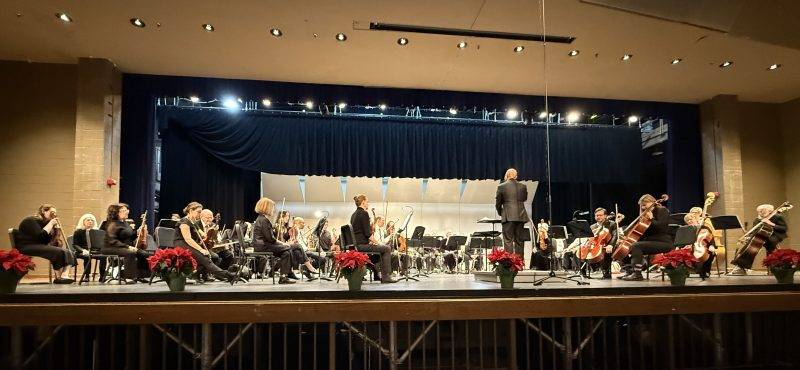
Come find out at our concert on Saturday, Dec. 6, at 4:00 p.m., where we’ll present classic works by 19th-21st century composers. This family-friendly concert will take place at Walt Whitman High School in Bethesda, Md., in the Daryl W. Shaw Auditorium. Free admission!
Program
Ferde Grofe (1892-1972) – Mississippi Suite
Charles Ives (1874-1954)/arr. Boyd – “The Alcotts” from Piano Sonata No. 2
William Grant Still (1895-1978) – Serenade
Edward Macdowell (1860-1908)/arr. Woodhouse – selected Woodland Sketches
Elena Specht (living composer; b. 1993) – We Will Soar
We Will Soar
Elena Specht (b. 1993)
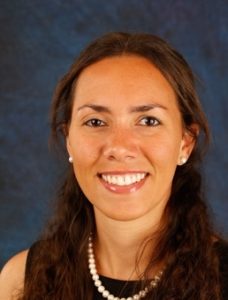
Composer Elena Specht writes instrumental and vocal concert music with an emphasis on colorful textures, lively rhythms, and graceful lyricism. Her music is inspired by places, history, captivating questions, visual art, and compelling stories. Elena’s music is enjoyed by both beginning and professional musicians, and it reaches diverse audiences. She writes for a variety of instruments and voices, specializing in music for wind bands. Elena also values creating music that is accessible to young and amateur musicians yet rich in quality. To that end, she has written works for middle school, high school, and community ensembles and has regularly arranged and composed music for the Greater Boulder Youth Orchestras Wind Ensemble.Recent performances and commissions have come from the United States Coast Guard Band, the Flint Symphony Orchestra Brass Quintet, The Penn State Symphonic Winds, the Northern Illinois University Philharmonic Orchestra, and the Grand Valley State University New Music Ensemble. As a part of the University of Colorado’s New Opera Works – Composer Fellows’ Initiative, she wrote libretti and music for two short operas. Elena is currently a music librarian with “The President’s Own” United States Marine Band*, where she prepares music for performances by the Marine Band and Marine Chamber Orchestra and assists with maintaining the music library and historic archives. Elena previously taught music theory and music history at various institutions throughout the United States. Her primary composition teachers have been David Biedenbender, Alexis Bacon, Carter Pann, Daniel Kellogg, and Michael Slayton. She also studied horn with Leslie Norton.
*The information presented on this website has been prepared solely by the author and neither “The President’s Own” United States Marine Band, the U.S. Marine Corps nor any other component of the Department of Defense or the U.S. Government has endorsed this material.
About
We Will Soar was commissioned by the Denver Pops Orchestra in celebration of the centennial of the 19th Amendment, guaranteeing women the right to vote. It premiered on October 16, 2021. Ratified on August 18, 1920, this amendment prohibits state and federal governments from denying the right to vote on the basis of sex. This piece recognizes this achievement and the ever-increasing ways women’s voices are heard and represented in the public sphere. In writing We Will Soar, Elena sought to honor the women who persistently and courageously fought for suffrage prior to the Amendment, as well as the many who have voted, run for office, and advocated for women’s issues since. Though much work remains, the composer is grateful to the women from earlier generations whose work has brought the rights and freedoms women now have. We Will Soar is bold and joyful, a triumphant anthem in recognition of the accomplishments of American women and in hope of a future in which women continue to soar.
We Will Soar
Serenade
William Grant Still (1895-1978)
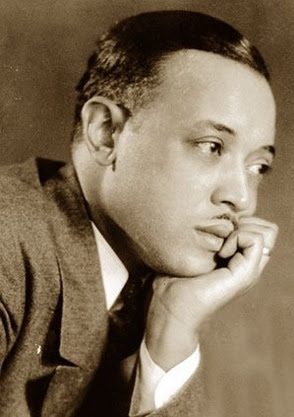
William Grant Still Jr. composed nearly two hundred works, including five symphonies, four ballets, nine operas, and more than thirty choral works, art songs, chamber music, and solo works. Born in Mississippi and raised in Little Rock, Arkansas, Still attended Wilberforce University and Oberlin Conservatory of Music as a student of George Whitefield Chadwick and then as a student of Edgard Varèse. Because of his close association and collaboration with prominent African-American literary and cultural figures, Still is considered to be part of the Harlem Renaissance.
Still was the first American composer to have an opera produced by the New York City Opera. He is known primarily for his first symphony, Afro-American Symphony (1930), which, until 1950, was the most widely performed symphony composed by an American. Still often is referred to as the “Dean of Afro-American Composers”. He was able to become a leading figure in the field of American classical music as the first African-American to conduct a major American symphony orchestra, have a symphony performed by a leading orchestra, have an opera performed by a major opera company, and have an opera performed on national television. The papers of Still and his second wife, the librettist and writer Verna Arvey, are currently held by the University of Arkansas.
Still showed a great interest in music and started violin lessons in Little Rock at the age of 15. He taught himself to play the clarinet, saxophone, oboe, double bass, cello, and viola. At 16 years old, he was graduated as class valedictorian from M. W. Gibbs High School in Little Rock in 1911. His mother wanted him to go to medical school, so Still pursued a bachelor of science degree program at Wilberforce University, a historically black college in Ohio. Still became a member of Kappa Alpha Psi fraternity. He conducted the university band, learned to play various instruments, and started to compose and to perform orchestrations. He left Wilberforce without graduation. Using a small amount of money left to him by his father, he began studying at the Oberlin Conservatory of Music. Still worked for the school assisting the janitor and at a few small jobs outside of the school, but struggled financially. When Professor Lehmann asked him why he wasn’t studying composition, Still replied that he simply couldn’t afford to. When this became known, George Whitfield Andrews [16] taught composition to Still, without charge.[3] He also was able to study privately with the modern French composer Edgard Varèse and the American composer George Whitefield Chadwick.
Mississippi
Ferdinand Rudolph von (Ferde) Grofé (1892-1972)
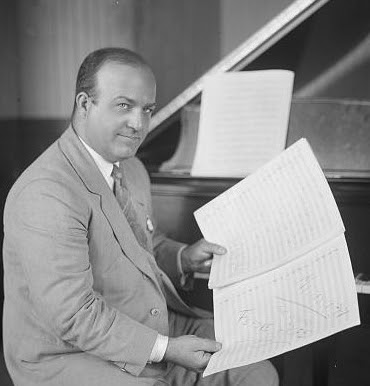
Ferdinand Grofé was born in New York City in 1892, and was lucky enough to be born into a musical family. His father was a classical baritone singer, his mother a professional cellist. As well as this, his mother Elsa also taught Ferde the piano and violin, as her other occupation was being a music teacher. After his father’s death in 1899, he and his mother moved abroad to Leipzig in Germany to pursue Grofé’s musical education. Grofé became competent in a wide-range of different instruments, with piano and viola being his favorites. By being so competent in a range of instruments, this allowed Grofé to utilize his arranging, and then compositional skills.
By 1920, Grofé started moving away from classical music, and started playing jazz piano for the Paul Whiteman orchestra. He arranged for Paul Whiteman until 1932, and in that time, he had arranged hundreds of popular songs for the ensemble. Perhaps his most famous arrangement still to date is that of George Gershwin’s Rhapsody in Blue. Grofé took the famous work for two pianos, and arranged and orchestrated it for the Paul Whiteman orchestra. The arrangement that we know of today (with that iconic clarinet solo) was from the arrangement by Grofé.
As well as professional arranger, Grofé was also a composer. He wrote a range of orchestral suites such as the Niagara Falls Suite, Grand Canyon Suite and the Death Valley Suite, all of which were fairly popular in their time. By the 1930’s, Grofé started composing for film and he produced scores for the films King of Jazz, Minstrel Man and Redemption. After moving back to the USA after leaving Leipzig, Grofé spent most of his life living in New Jersey, and by 1945 he had moved to LA. Grofé married three times and had four children, he died in Santa Monica in 1972.
The Alcotts
Charles Ives (1874-1954)
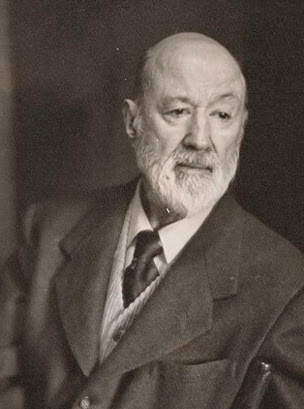
Charles Edward Ives was an American modernist composer, actuary and businessman. Ives was among the earliest renowned American composers to achieve recognition on a global scale. His music was largely ignored during his early career, and many of his works went unperformed for many years. Later in life, the quality of his music was publicly recognized through the efforts of contemporaries like Henry Cowell and Lou Harrison, and he came to be regarded as an “American original”. He was also among the first composers to engage in a systematic program of experimental music, with musical techniques including polytonality, polyrhythm, tone clusters, aleatory elements, and quarter tones. His experimentation foreshadowed many musical innovations that were later more widely adopted during the 20th century. Hence, he is often regarded as the leading American composer of art music of the 20th century.
Sources of Ives’s tonal imagery included hymn tunes and traditional songs; he also incorporated melodies of the town band at holiday parade, the fiddlers at Saturday night dances, patriotic songs, sentimental parlor ballads, and the melodies of Stephen Foster.
Life and Career
Ives was born in Danbury, Connecticut, on October 20, 1874, the son of George (Edward) Ives, a US Army bandleader in the American Civil War, and his wife, Mary Elizabeth Ives. The Iveses, descended from founding colonists of Connecticut, were one of Danbury’s leading families, and they were prominent in business and civic improvement. They were similarly active in progressive social movements of the 19th century, including the abolition of slavery.
George Ives directed bands, choirs, and orchestras, and taught music theory and a number of instruments. Charles got his influences by sitting in the Danbury town square and listening to his father’s marching band and other bands on other sides of the square simultaneously. His father taught him and his brother (Joseph) Moss Ives (February 5, 1876 – April 7, 1939) music, teaching harmony and counterpoint and guided his first compositions; George took an open-minded approach to theory, encouraging him to experiment in bitonal and polytonal harmonizations. It was from him that Ives also learned the music of Stephen Foster. He became a church organist at the age of 14 and wrote various hymns and songs for church services, including his Variations on “America”, which he wrote for a Fourth of July concert in Brewster, New York. It is considered challenging even by modern concert organists, but he famously spoke of it as being “as much fun as playing baseball”, a commentary on his own organ technique at that age.
Ives moved to New Haven, Connecticut, in 1893, enrolling in the Hopkins School, where he captained the baseball team. In September 1894, Ives entered Yale University, studying under Horatio Parker. Here he composed in a choral style similar to his mentor, writing church music and even an 1896 campaign song for William McKinley. On November 4, 1894, his father died, a crushing blow to him, but to a large degree, he continued the musical experimentation he had begun with him. His brother Moss later became a lawyer.
At Yale, Ives was a prominent figure; he was a member of HeBoule, Delta Kappa Epsilon (Phi chapter) and Wolf’s Head Society, and sat as chairman of the Ivy Committee. He enjoyed sports at Yale and played on the varsity American football team. Michael C. Murphy, his coach, once remarked that it was a “crying shame” that he spent so much time at music as otherwise he could have been a champion sprinter. His works Calcium Light Night and Yale-Princeton Football Game show the influence of college and sports on Ives’s composition. He wrote his Symphony No. 1 as his senior thesis under Parker’s supervision. Ives continued his work as a church organist until May 1902.
Soon after he graduated from Yale in 1898, he started work in the actuarial department of the Mutual Life Insurance Company of New York. In 1899, Ives moved to employment with the insurance agency Charles H. Raymond & Co., where he stayed until 1906. In 1907, upon the failure of Raymond & Co., he and his friend Julian Myrickformed their own insurance agency Ives & Co., which later became Ives & Myrick, where he remained until he retired.
During his career as an insurance executive and actuary, Ives devised creative ways to structure life-insurance packages for people of means, which laid the foundation of the modern practice of estate planning. His Life Insurance with Relation to Inheritance Tax, published in 1918, was well received. As a result of this he achieved considerable fame in the insurance industry of his time, with many of his business peers surprised to learn that he was also a composer. In his spare time, he composed music and, until his marriage, worked as an organist in Danbury and New Haven as well as Bloomfield, New Jersey, and New York City.
In 1907, Ives suffered the first of several “heart attacks” (as he and his family called them) that he had throughout his life. These attacks may have been psychological in origin rather than physical. Stuart Feder questions the legitimacy of these heart attacks, as he could not find any medical confirmation of them in previous reports. According to Feder, “For the only reliable information tells us that he suffered from palpitations, not pain, the cardinal symptom of heart attack.” Following his recovery from the 1907 attack, Ives entered into one of the most creative periods of his life as a composer.
In 1908, he married Harmony Twichell, daughter of Congregational minister Joseph Twichell and his wife, Julia Harmony Cushman. The young couple moved into their own apartment in New York.
Ives had a successful career in insurance. He also continued to be a prolific composer until he suffered another of several heart attacks in 1918, after which he composed very little. He wrote his last piece, the song “Sunrise”, in August 1926. In 1922, Ives published his 114 Songs, which represents the breadth of his work as a composer—it includes art songs, songs he wrote as a teenager and young man, and highly dissonant songs such as “The Majority”.
According to his wife, one day in early 1927, Ives came downstairs with tears in his eyes. He could compose no more, he said; “nothing sounds right”. There have been numerous theories advanced to explain the silence of his late years. It seems as mysterious as the last several decades of the life of Jean Sibelius, who stopped composing at almost the same time. While Ives had stopped composing, and was increasingly plagued by health problems, he continued to revise and refine his earlier work, as well as oversee premieres of his music.
After continuing health problems, including diabetes, in 1930 he retired from his insurance business. Although he had more time to devote to music, he was unable to write any new music. During the 1940s, he revised his Concord Sonata, publishing it in 1947 (an earlier version of the sonata and the accompanying prose volume, Essays Before a Sonata were privately printed in 1920).
Ives died of a stroke in 1954 in New York City. His widow, who died in 1969 at age 92, bequeathed the royalties from his music to the American Academy of Arts and Letters for the Charles Ives Prize.
Woodland Sketches
Edward MacDowell (1860-1908)
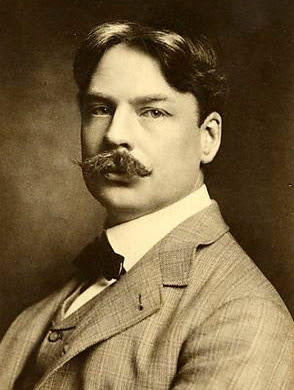
Edward MacDowell (1860–1908) was an American composer and pianist, best known for his piano miniatures and orchestral works that blend European Romanticism with American themes. He was one of the first American composers to gain international recognition and was heavily influenced by German and French Romantic composers such as Schumann, Liszt, and Grieg. MacDowell’s music features lush harmonies, expressive melodies, and programmatic elements.
He often drew inspiration from nature, poetry, and folklore. He was best known for his second piano concerto and his piano suites Woodland Sketches, Sea Pieces and New England Idylls. Woodland Sketches includes his most popular short piece, “To a Wild Rose”. In 1904 he was one of the first seven Americans honored by membership in the American Academy of Arts and Letters.
Edward MacDowell’s life was a journey marked by early talent, European influence, and a deep commitment to shaping American classical music. Born in 1860 in New York City, he showed musical promise from a young age. His parents, recognizing his potential, sent him to France at 15 to study at the Paris Conservatoire. However, he found Paris stifling and soon moved to Germany, where he immersed himself in the rich Romantic traditions of composers like Schumann and Liszt.
It was in Germany that MacDowell’s career truly began to take shape. He studied in Frankfurt and then in Wiesbaden, where he composed some of his early works. He also had a pivotal encounter with Franz Liszt, who encouraged him to publish his compositions. During this period, MacDowell developed his distinctive style—deeply expressive, with a blend of European Romanticism and hints of an emerging American voice.
In 1888, he returned to the United States and settled in Boston, where he gained recognition as both a composer and a virtuoso pianist. His Piano Concerto No. 2 was particularly well-received, cementing his reputation as one of America’s leading musicians. During this time, he also composed some of his most beloved piano works, including Woodland Sketches, which captured the poetic and naturalistic qualities that would become his hallmark.
However, his career was cut short due to illness, and he died at the age of 47.
The NIHCO will be performing movements No. 1: To a Wild Rose, No. 2: Will o’ the Wisp, 4. To a Water Lily, No. 6: To a Water-Lily, No. 9: By a Meadow Brook, and No. 10: Told at Sunset.