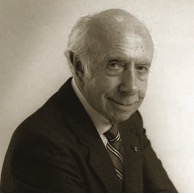
Morton Gould (1913-1996) was an American composer, conductor, and pianist born in New York City. Gould was a prolific composer, and his works include orchestral pieces, chamber music, ballets, and film scores. He was also a well-known conductor, and he led many of the world’s leading orchestras.
His father, James, was from Bulgaria, but loved to regale people with fabricated stories about his life in Vienna, a history that included a stint in the emperor’s guard and a victory in an old world duel. The Gould residence was always overflowing with music, thanks largely to a player piano that churned out popular classical music. One day when Gould was four or five, his mother hear one of the familiar tunes playing from the living room, but when she investigated, she was surprised to find her young son playing in imitation of one of the selections. (The Gould family tells several slightly different versions of this story, but it is this account that is corroborated by the composer.)
At age nine Gould had already given his first radio broadcast and was regularly performing at local hotels and department stores. He earned early admission to the prestigious Institute of Musical Art in 1923, although his experience there was unpleasant and short-lived due to an unsympathetic and shortsighted piano instructor. When she found out that he couldn’t read music, the composer reports “there was hell to pay.” She discouraged all his attempts to improvise and compose, telling him, “Who do you think you are, Beethoven? If I ever catch you improvising again, you will lose your scholarship!” By the spring of 1925, Gould’s parents decided to disenroll him, ending his academic musical training after just two years. Although he would go on to study with more understanding and sympathetic teachers such as Jospeh Kardos, Vincent Jones, and Abby Whiteside, he was never again formally enrolled in a music school.
By 1931 his efforts had caught the notice of Fritz Reiner, who offered him a scholarship to study conducting at the Curtis Institute in Philadelphia. Because of his family’s financial straits, Gould turned Reiner down, a decision that haunted him for the rest of his life. Although he was unable to pursue his academic dreams, life did take a turn for the better in July 1933 when he was hired as a staff pianist by the National Broadcasting Company (NBC). The move to radio was fortuitous and impeccably timed. The industry may have been barely a decade old in 1933, but radio was a phenomenon that was taking the country by storm. Wireless sets could be found in nearly every household, and radio stations were popping up from coast to coast. While these stations featured some local programming, newly formed networks such as NBC began providing news and entertainment programs that were broadcast across the country. These networks could offer musicians employment far more stable than anything Gould would find on the vaudeville circuit, and the move to radio marked a turning point in his career. Although his duties at NBC were limited to playing piano, Gould continued to find opportunities to compose, arrange, and conduct, earning a reputation around New York City that even caught the attention of George Gershwin. In 1935, Gould was hired by the station WOR under the job description that defined him for the next decade: music director. At the tender age of twenty-one, Gould was handed the reins of WOR’s Music Today, a nationally broadcast program that featured light classics, popular music, and show tunes. Gould’s responsibilities included choosing selections for each weekly broadcast, composing and arranging new selections as needed, and conducting the orchestra. In spite of the fact that he was a boy working in a man’s world, he was given complete artistic control.
In addition to original compositions that utilized popular American styles, Gould also began creating short fantasies based on well-known American tunes for use on the radio. These works were undoubtedly an extension of his highly regarded skills as an improviser, for they convey a sense of spontaneity that sounds as fresh now as the day they were conceived. Nowhere is this more evident than in his iconic “American Salute,” based on the tune “When Johnny Comes Marching Home.” Written in 1942 in the early days of World War II, it was composed at the request of a government radio program producer who wanted a “salute to America.” The composer insisted that he had no idea that the work was destined to become a classic: “It was years before I knew it was a classic setting. What amazes me is that critics say it is a minor masterpiece, a gem. “To me, it was just a setting. I was doing a million of those things.” A million may be an exaggeration, but not by much. The pace of Gould’s schedule in those days is astounding. By his own account he composed and scored “American Salute” in less than eight hours, starting at 6 p.m. the evening before it was due !with copyists standing by), and finishing at 2 a.m. Although the ink couldn’t have been dry, the score and parts were on the stands in time for rehearsal the next morning and ready for broadcast that evening.
https://sheetmusicinternational.com/program-notes/gould-morton-318
https//www.marineband.marines.mil/Portals/175/Docs/Audio/Educational_Series/morton_gould/morton_gould_booklet_lowres.pdf
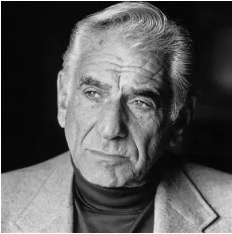
Leonard Bernstein (1918-1990), composer, conductor, educator, and humanitarian, forged his many talents with an irresistible personality to transform the way people everywhere hear and appreciate music. He broke rules, shattered precedents, and opened doors, insisting that music could, and should, play a vital role in the lives of all people. A native of Boston, had a life-long fascination with New York City. He served as music director and conductor of the New York Philharmonic for many years, and used the city as the setting for several of his own original works, most notably “West Side Story”.
Bernstein’s successes as a composer ranged from the Broadway stage (most notably, West Side Story) to concert halls all over the world, where his orchestral and choral works continue to thrive. As a conductor of a vast repertoire, he was a dynamic presence on the podiums of the world’s great orchestras for half a century, leaving a legacy that endures through an uncommonly rich and diverse catalogue of over 500 recordings and filmed performances. He was the first American-born and -trained conductor to be appointed music director of a major American orchestra, and the first to conduct the Berlin Philharmonic, the London Symphony Orchestra, the Royal Concertgebouw, among others.
From his earliest days, Bernstein was a true believer in the music of his time. The lasting popularity of the music of Mahler, Shostakovich, and many other 20th-century masters owes much to his inspired advocacy. Around the world he championed American composers such as Aaron Copland, William Schuman, Samuel Barber, Roy Harris, and Lukas Foss. The breadth of Bernstein’s repertoire, the depth of his convictions, and the charismatic energy with which he articulated them, made him a superstar in the classical world and a beloved public figure.
Leonard Bernstein’s life and musical opportunities were uniquely American. Born in Lawrence, Massachusetts on August 25, 1918, he was the son of middle-class Ukrainian Jewish immigrants Samuel and Jennie Bernstein. His musical abilities became readily apparent when he was a child, and he worked hard to convince his father that a musical career would offer him a stable future. He started piano lessons with Helen Coates, and began composing while attending the Garrison and Boston Latin Schools. In 1935, Bernstein enrolled at Harvard College, where he studied music with, among others, Edward Burlingame Hill and Walter Piston. Shortly before graduating in 1939, Bernstein made an informal conducting debut with his own incidental music for Aristophanes’ The Birds, and he also directed and performed in Marc Blitzstein’s The Cradle Will Rock. Accepted into the Curtis Institute of Music in Philadelphia, he studied piano with Isabella Vengerova, conducting with Fritz Reiner, and orchestration with Randall Thompson. In the summer of 1940, he began what would become a lifelong association with the Boston Symphony Orchestra’s newly created summer festival at Tanglewood in western Massachusetts. There he met the orchestra’s conductor, Serge Koussevitzky, and became Koussevitzky’s conducting assistant.
When Bernstein was only twenty-five, he held his first conducting post as Assistant Conductor of the New York Philharmonic. It was in this capacity that, on November 14, 1943, he made his historic conducting debut. With only a few hours’ notice, he substituted for the ailing Bruno Walter at a Carnegie Hall concert and became famous overnight. The performance was broadcast nationwide on CBS radio, and the next day made the front-page of the New York Times. This acclaim quickly led to invitations to conduct orchestras all over the world.
At the same time, Bernstein was beginning to make his mark as a composer. He completed his Symphony No. 1: Jeremiah in 1943, and conducted its world premiere with the Pittsburgh Symphony Orchestra the following year. The symphony won him the New York Music Critics Award. In 1944, Bernstein collaborated with his friend, the dancer and choreographer Jerome Robbins, on a new ballet entitled Fancy Free. The acclaim for the work sparked them to expand it into a full-fledged Broadway musical: with their friends Betty Comden and Adolph Green, they created On the Town (1944) and it became their first Broadway hit.
Bernstein’s limitless energy and virtuosity were legend in New York in the 1940s, when he seemed to be everywhere at once. At the time, he began building a conventional conducting career, with the advice and counsel of such mentors as Koussevitzky, Artur Rodzinski, and Dimitri Mitropoulos. His versatility also reinvented the role of the serious American composer, as he moved freely between Broadway, jazz, and classical composition styles. With Comden and Green and their friend Judy Holliday, he performed in nightclubs as part of The Revuers. The night before his impromptu New York Philharmonic debut, mezzo-soprano Jennie Tourel, at her Town Hall debut recital, gave the first performance in New York of Bernstein’s “I Hate Music.”
In 1945, Bernstein was named Music Director of the New York City Symphony Orchestra, a post he held until 1947. That same year, he conducted in Tel Aviv (then in Palestine) for the first time, beginning a lifelong association with Israel and its people. After the war, Bernstein made his conducting career truly international in scope, and in 1953 became the first American to conduct an opera at Milan’s Teatro alla Scala in acclaimed performances of Cherubini’s Medea and Bellini’s La sonnambula, both with Maria Callas in the title role. With the death of Koussevitzky in 1951, Bernstein’s presence at Tanglewood grew, while he also served as a visiting professor at Brandeis University in Boston. That same year, he married the Chilean actress and pianist Felicia Montealegre Cohn, with whom he had three children: Jamie, Alexander, and Nina.
Bernstein’s recording career began in earnest in 1956, when he began a long recording artist relationship with Columbia Masterworks (now Sony Classical). Starting in the 1970s, he then built an extensive catalogue of recordings for Deutsche Grammophon. As television became a part of everyday life, Leonard Bernstein immediately saw its potential in sharing music with a broader audience. His first televised appearance was in 1954 on the CBS television program Omnibus, where he spoke about topics ranging from Beethoven to opera to jazz. However, his television popularity exploded in 1958 when he worked with CBS to broadcast the New York Philharmonic Young People’s Concerts for the first time. Through his imaginative programming ideas and engaging presence, he made even the most rigorous elements of classical music an adventure in which everyone could join.
His television work made him the most famous classical musician in America, and he soon became America’s cultural emissary on tour with the New York Philharmonic to Moscow in 1959, and to Berlin in 1960. In the 1970s-1990, Bernstein’s concerts with major orchestras the world over were recorded by Unitel, and they were broadcast on PBS’s Great Performances series. Over the course of his career, he won eleven Emmy Awards.
Bernstein became Music Director of the New York Philharmonic in 1958. From then until 1969 he led more concerts with the orchestra than any previous conductor, and was subsequently named a permanent Laureate Conductor. More than half of Bernstein’s 500-plus recordings are with the New York Philharmonic. He had a vast repertoire encompassing all periods and styles; however, Bernstein may be best remembered for his performances and recordings of Beethoven, Brahms, Copland, Haydn, Schumann, and Sibelius. Particularly notable were his performances of the Mahler symphonies with the New York Philharmonic in the 1960s, sparking a renewed interest in the works of Mahler.
Bernstein admired Richard Rodgers and Oscar Hammerstein and firmly believed the musical to be the American opera of the twentieth century. Consequently, for years he discussed the idea of adapting the Romeo and Juliet story using youthful gang rivalry in New York City as a backdrop, with colleagues Stephen Sonheim and choreographer, Jerome Robbins. The result, West Side Story, brought groundbreaking results in musical theatre with a prevailing tragic tone, full integration of dance and the tritone interval (a restless, dissonant chord) unifying the musical material.
Following its initial release, several arrangements were made of its lively rhythmic music. Perhaps their most challenging task was condensing the lavish score into something usable for orchestras. Jack Mason’s medley of seven and the sung numbers manages to hold a healthy balance between musical flow and Bernstein’s original orchestration. After a stirring but brief introduction, he moves swiftly to the lighthearted “I Feel Pretty.” Relaxing into an almost full rendition of the richly melodic “Maria,” he then abruptly switches pace with the anxious “Something’s Coming”. “Tonight” shows off some Latin sensitivity, contrasting rhythmic accompaniment with lyrical lines and, following a brass fanfare, we are prepared for the intimate “One Hand, One Heart”. The poignant innocence created finds no rest with a rude awakening from the brass and woodwinds, signaling the arrival of “Cool.” It’s nervous rhythms and use of tritone is resolved through an upbeat “America,” taking us to a rousing full orchestra coda and conclusion.
https://www.leonardbernstein.com/about
https://www.scribd.com/document/776810596/program-notes
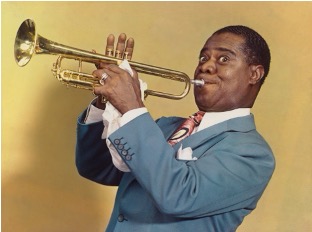
Louis Armstrong (1901 – 1971), nicknamed “Satchmo”, “Satch”, and “Pops”, was an American jazz and blues trumpeter and vocalist. Among the most influential figures in jazz, his career spanned five decades and several eras in the history of the genre.
Armstrong was born and raised in New Orleans. Coming to prominence in the 1920s as an inventive trumpet and cornet player, he was a foundational influence in jazz, shifting the focus of the music from collective improvisation to solo performance. Around 1922, Armstrong followed his mentor, Joe “King” Oliver, to Chicago to play in Oliver’s Creole Jazz Band. Armstrong earned a reputation at “cutting contests”, and his fame reached band leader Fletcher Henderson. Armstrong moved to New York City, where he became a featured and musically influential band soloist and recording artist. By the 1950s, Armstrong was an international musical icon, appearing regularly in radio and television broadcasts and on film. Apart from his music, he was also beloved as an entertainer, often joking with the audience and keeping a joyful public image at all times.
With his instantly recognizable, rich, gravelly voice, Armstrong was also an influential singer and skillful improviser. He was also skilled at scat singing. By the end of Armstrong’s life, his influence had spread to popular music. He was one of the first popular African-American entertainers to “cross over” to wide popularity with white and international audiences. Armstrong rarely publicly discussed racial issues, sometimes to the dismay of fellow black Americans, but took a well-publicized stand for desegregation in the Little Rock Crisis. He could access the upper echelons of American society at a time when this was difficult for black men. His recording of “Melancholy Blues” is included on the Voyager Golden Record, a sample of the sights and sounds of Earth sent into space.
At age 11, after firing a blank from his stepfather’s gun without permission, Armstrong was arrested and sent to juvenile detention. There, he developed his cornet skills by playing in the band. He was released in 1914 and later found a job in a dance hall. Armstrong listened to the early sounds of jazz from bands that played in brothels and dance halls, such as Pete Lala’s, where King Oliver performed. In the late 1910s, Armstrong played in brass bands and riverboats in New Orleans. Throughout his riverboat experience, Armstrong’s musicianship began to mature and expand. At age 20, he could read music. Armstrong became one of the first jazz musicians to be featured on extended trumpet solos, injecting his own personality and style. Armstrong also started singing in his performances.
In 1922, Armstrong moved to Chicago at the invitation of King Oliver, although Armstrong would return to New Orleans periodically for the rest of his life. Playing second cornet to Oliver in Oliver’s Creole Jazz Band in the black-only Lincoln Gardens on the South Side of Chicago, Armstrong could make enough money to quit his day jobs. Oliver’s band was among Chicago’s most influential jazz bands in the early 1920s. Armstrong lived luxuriously in his apartment with his first private bath. Excited to be in Chicago, Armstrong began his career-long pastime of writing letters to friends in New Orleans. Armstrong could blow 200 high Cs in a row. As his reputation grew, Armstrong was challenged to cutting contests by other musicians.
Armstrong and Oliver parted amicably in 1924. Shortly afterward, Armstrong was invited to go to New York City to play with the Fletcher Henderson Orchestra, the top African-American band of the time. He switched to the trumpet to blend in better with the other musicians in his section. Armstrong’s influence on Henderson’s tenor sax soloist, Coleman Hawkins, can be judged by listening to the records made by the band during this period. Armstrong adapted to Henderson’s tightly controlled style, playing the trumpet and experimenting with the trombone. The other members were affected by Armstrong’s emotional style. His act included singing and telling tales of New Orleans characters, especially preachers. The Henderson Orchestra played in prominent venues for white patrons only, including the Roseland Ballroom, with arrangements by Don Redman. Duke Ellington’s orchestra went to Roseland to catch Armstrong’s performances. During this time, Armstrong recorded with Clarence Williams (a friend from New Orleans), the Williams Blue Five, Sidney Bechet, and blues singers Alberta Hunter, Ma Rainey, and Bessie Smith.
Armstrong made a huge impact during the 1920s Harlem Renaissance. His music touched well known writer Langston Hughes. Hughes admired Armstrong and acknowledged him as one of the most recognized musicians of the era. Hughes wrote many books that celebrated jazz and recognized Armstrong as one of the leaders of the Harlem Renaissance’s newfound love of African-American culture. The sound of jazz, along with musicians such as Armstrong, helped shape Hughes as a writer. Just like the musicians, Hughes wrote his words with jazz. Armstrong changed jazz during the Harlem Renaissance. As “The World’s Greatest Trumpet Player” during this time, Armstrong cemented his legacy and continued.
The Great Depression of the early 1930s was especially hard on the jazz scene. After a long downward spiral, the Cotton Club closed in 1936, and many musicians stopped playing altogether as club dates evaporated. Bix Beiderbecke died, and Fletcher Henderson’s band broke up. King Oliver made a few records but otherwise struggled. After a tour across the country shadowed by the mob, he fled to Europe. After returning to the United States, Armstrong undertook several exhausting tours. His agent, Johnny Collins’s erratic behavior and his own spending ways left Armstrong short of cash. Breach of contract violations plagued him. Armstrong hired Joe Glaser as his new manager, a tough mob-connected wheeler-dealer who began straightening out his legal mess, mob troubles, and debts. After spending many years on the road, Armstrong settled permanently in Queens, New York, in 1943. Bookings for big bands tapered off during the 1940s due to changes in public tastes. Ballrooms closed, and competition from other types of music, especially pop vocals, became more popular than big band music. Under such circumstances, it became impossible to finance a 16-piece touring band. Armstrong’s manager, Joe Glaser, changed the Armstrong big band on August 13, 1947, into a six piece traditional jazz group featuring Armstrong with (initially) Teagarden, Earl Hines and other top swing and Dixieland musicians, most of whom were previously leaders of big bands. The new group was announced at the opening of Billy Berg’s Supper Club.
Armstrong was the first jazz musician to appear on the cover of Time magazine on February 21, 1949. He and his All-Stars were featured at the ninth Cavalcade of Jazz concert also at Wrigley Field in Los Angeles produced by Leon Hefflin Sr. held on June 7, 1953, along with Shorty Rogers, Roy Brown, Don Tosti and His Mexican Jazzmen, Earl Bostic, and Nat “King” Cole. Over 30 years, Armstrong played more than 300 performances a year, making many recordings and appearing in more than 30 films.
By the 1950s, Armstrong was a widely beloved American icon and cultural ambassador who commanded an international fanbase. However, a growing generation gap became apparent between him and the young jazz musicians who emerged in the postwar era, such as Charlie Parker, Miles Davis, and Sonny Rollins.
In 1964, after more than two years without setting foot in a studio, Armstrong recorded his biggest-selling record, “Hello, Dolly!”, a song by Jerry Herman, originally sung by Carol Channing. Armstrong’s version remained on the Hot 100 for 22 weeks, longer than any other record produced that year, and went to No. 1, making him the oldest person to accomplish that feat at 62 years, nine months, and five days. Armstrong’s hit dislodged The Beatles from the No. 1 position they had occupied for 14 consecutive weeks with three different songs. By 1968, Armstrong was approaching 70, and his health was failing. His heart and kidney ailments forced him to stop touring, though he continued to record, including “What a Wonderful World”, which topped the British charts for a month. Armstrong did not perform publicly in 1969 and spent most of the year recuperating at home. Meanwhile, his longtime manager, Joe Glaser, died. By the summer of 1970, Armstrong’s doctors pronounced him fit enough to resume live performances. Armstrong embarked on another world tour, but a hear attack forced him to take a break for two months. Armstrong made his last recorded trumpet performances on his 1968 album Disney Songs the Satchmo Way.
Against his doctor’s advice, Armstrong played a two-week engagement in March 1971 at the Waldorf-Astoria’s Empire Room. At the end of it, he was hospitalized for a heart attack.[136] Armstrong was released from the hospital in May and quickly resumed practicing his trumpet playing. Still hoping to get back on the road, Armstrong died of a heart attack in his sleep on July 6, 1971. Armstrong was residing in Corona, Queens, New York City, at the time of his death.
Arranger Ted Ricketts brings us this musical tribute to an American treasure, with a medley of Louis Armstrong’s most famous songs. NIHCO principal trumpeter, Jerry Danoff, is featured channeling ol’ Satchmo himself:
“What a Wonderful World” was recorded by Louis Armstrong and released in 1967 as a single. The song was very popular in the United Kingdom, but wasn’t well known in the United States because the record company president disliked the song and refused to promote it. After appearing in the film Good Morning, Vietnam, the song was reissued in 1988 and has become an enduring pop standard. The song has been recorded by numerous artists including Willie Nelson, Roy Clark, Anne Murray, Rod Stewart, and Celeste. Armstrong’s recording was inducted to the Grammy Hall of Fame in 1999. Tonight’s arrangement has a brief statement of the melody at the very beginning, but don’t worry, you’ll hear several verses in the middle of the piece.
“When the Saints Go Marching In” is a traditional black spiritual which originated as a Christian hymn. It is frequently played by jazz bands, most famously recorded by Louis Armstrong and his Orchestra. The song has also been performed by Fats Domino, Judy Garland, Elvis Presley, Etta James, and many others! Domino’s version is played at home games when the New Orleans Saints score a touchdown. There are countless versions and arrangements of the tune. Since the first and second lines of a verse are exactly the same, and the third and fourth repeat throughout, one line in iambic tetrameter (a line of poetry with four beats of one unstressed syllable, followed by one stressed syllable) generates an entire verse.
“St. Louis Blues” is a popular American song composed by W.C. Handy in 1914. It was one of the first blues songs to succeed as a pop song and remains a jazz standard. The form is unusual in that the verses are the now-familiar twelve-bar blues with three lines of lyrics, the first two lines repeated, but it also has a 16-bar bridge with the habanera (or tango) rhythm.
“Hello, Dolly!” is the title song of the popular musical of the same name. The recording by Louis Armstrong released in 1964 was a widely popular success, winning the Song of the Year and Male Vocal Performance awards at the 7th Annual Grammy Awards. Armstrong’s rendition of the song became the most successful single of his career, and was eventually inducted into the Grammy Hall of Fame in 2001. He also performed the song alongside Barbra Streisand for the 1969 screen adaptation of the musical.
https://en.wikipedia.org/wiki/Louis_Armstrong
https://gbcivic.org/notes/2024-10-01/
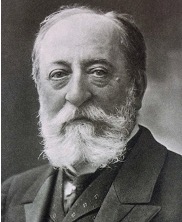
If Camille Saint-Saëns (1835-1921) had been just a pianist, he would have been as famous and as acclaimed as Anton Rubinstein, Leschetizky, Paderewski, or any other lion of the age. His piano concertos, all of which he played himself, provide scintillating evidence of his astonishing technique both in weight and nimbleness. Yet playing the piano was only one of many activities, not all of them concerned with music, that consumed him over a very long life. He was an immensely productive composer, producing music “as an apple-tree bears apples,” as he described it himself. No genre of music was untouched: operas, symphonies, concertos, tone poems, chamber music, songs, choral music, all in abundance; even a film score, one of the first ever composed. For many years he was organist at the Madeleine church in Paris; he conducted frequently; he wrote articles for the press and published half a dozen books; he wrote poetry and plays; he took a close interest in astronomy, archaeology, philosophy, and classical literature; he spoke many languages and traveled all over Europe giving concerts, including a series of all of Mozart’s piano concertos in London; he went to Scandinavia, Russia, Indochina, and Uruguay; he was involved in the whole spectrum of music-making in France for all of his career, and was a prime mover in the Société Nationale de Musique. His tastes ranged effortlessly from Wagner to the Baroque, and the composers he most admired were Mozart, Rameau, Gluck, Schumann, Berlioz, and Liszt. He was a modernist and a reactionary at the same time, an atheist who composed a huge quantity of religious music, a deeply serious and thoughtful composer whose best-known work is the frivolous Carnival of the Animals.
Such a man is rare in any culture, and now that we test his achievement solely by his music and his writings, his immense gifts are not so readily appreciated. Much of his music is bound to remain in obscurity, and there are few who would be bold enough to measure his achievement as a composer against Wagner or Verdi or Brahms. His works are appealing, superbly crafted, and full of surprises. Only at rare moments (such as in the second act of his opera Samson and Delilah) does he shake the heavens. He is very French in his desire to impress his hearers with the delicacy and rightness of every movement, to display impeccable taste, and to paint always in sensitive colors. His word-setting is faultless, his fugues are full of ingenious invention. His piano writing bears the signature of a brilliant pianist, and it takes a player of special gifts to throw off those cascades of scales and arpeggios as though they were the easiest thing in the world—as for him they were.
His first four piano concertos appeared between 1858 and 1875, the fifth (and last) following much later in 1896. The Second has always been the most popular. It was requested by the great Russian pianist and composer Anton Rubinstein, a frequent visitor to Paris, who was planning to appear as conductor in Paris’s Salle Pleyel. Saint-Saëns agreed to compose a concerto for the occasion, and with a deadline three weeks away he completed the task in seventeen days. Eleven further days, between May 2 and May 13, 1868, were needed to prepare the orchestra for the first performance. He kept the concerto in his concert repertoire for the rest of his life, playing it for the last time with the Boston Symphony Orchestra in 1906.
Saint-Saëns wrote the Piano Concerto No. 2 in G minor in less than three weeks in 1868. Camille Saint-Saëns composed his Piano Concerto No. 2 in G minor in Paris in just 17 days during April and May 1868; he played the solo part in the first performance on May 13 that year at a Concert Populaire in the Salle Pleyel, Paris, with Anton Rubinstein conducting. It remains his most familiar entry in the genre. The tempo of the first movement is broad, not the Allegro that most concertos offer. It has real substance as well as opportunities for deft finger work from the soloist, and it can also generate considerable force for the return of the main theme. Listeners can hear the neoclassical style in the Bach-style passages of the monumental first movement The Bach-like introduction returns to round off the movement, this time accompanied by the strings, a touch that Liszt particularly admired. NIHCO Pianist and violinist Hong-Cheong Chan performs the first movement of this popular concerto. The opening Andante Sostenuto movement contains a number of surprises. The first comes at the very beginning: the opening movement begins with an extended cadenza for solo piano rather than the typical orchestral exposition of the classical concerto. This cadenza is not so much a bravura showcase as it is an act of homage to Bach, its neoclassical poise paying tribute to a composer Saint-Saëns admired very much. After the orchestra makes its own dramatic entrance, the movement develops in more normal form, with a graceful second subject that flows easily between unexpected keys. This is brilliant music—the concerto was a particular favorite of that other piano-playing Rubinstein, Arthur—and Saint-Saëns offers the soloist a further cadenza just before the close.
https://www.bso.org/works/piano-concerto-no-2-saint-saens
https://nac-cna.ca/en/event/notes/21694
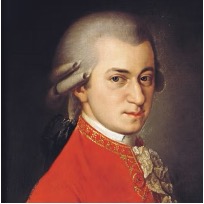
Wolfgang Amadeus Mozart (1756-1791) was the youngest child of the archiepiscopal court musician Leopold Mozart and his wife Anna Maria, née Pertl. His sister Maria Anna was five years his senior and became a skilled keyboardist in her own right. At the ages of five and six, Wolfgang demonstrated outstanding musical talent on the keyboard and violin; Leopold proudly presented him at the Salzburg court and, in 1762, also in Munich, Prague, and Vienna. These successes encouraged Leopold to undertake a more extensive European concert tour from June 1763 through December 1766, with both children performing. Wolfgang increasingly also presented compositions of his own, among them 16 sonatas for keyboard and violin and several symphonies. The journey included court appearances in Munich, Mannheim, Paris, London, The Hague, Amsterdam, Utrecht, and, on the journey back home, Paris, Zurich, Donaueschingen, and Munich. Of significant influence were his 1764–65 visits with Johann Christian Bach (the youngest son of Johann Sebastian) in London.
Leopold Mozart, who had generous patrons in the Salzburg Prince-Archbishops, was able to continue his son’s education and musical training from the end of 1767 until the beginning of 1769 in Vienna. At the age of 12, the young Mozart had already made a name for himself as a composer of opera. His La finta semplice (1768) was followed by three commissions involving long periods spent in Milan: Mitridate, Re di Ponto (1770), Ascanio in Alba (1771) and Lucio Silla (1772).
Before Mozart’s first journey in 1770 to Italy, Archbishop Schrattenbach conferred upon him the honorary title of concertmaster at age 14. But soon after Archbishop Colloredo’s accession in 1772, he was appointed salaried concertmaster, in which capacity he led the court orchestra and composed for performances both at the princely residence and the cathedral. And as the piano was his principal instrument, he composed a set of piano sonatas (K. 279–284) and the Piano Concertos Nos. 5–10. An excellent violinist as well, he wrote five violin concertos for himself between 1773 and 1775.
Feeling increasingly unhappy in Salzburg, and as Archbishop Colloredo did not support opera, Mozart took a leave in September 1777 and traveled to Mannheim and Paris, accompanied by his mother. It was in Paris that he called himself Wolfgang Amadé Mozart, and he maintained this name from then on. However, despite valuable experiences and considerable success as a pianist and composer, the journey ended in disappointment. Neither in Manheim nor in Paris did he find a position; moreover, his mother died of typhus in Paris. Mozart had to return to service in Salzburg, but his father managed to get him a well-paid post as court organist, in which capacity he composed masses and other sacred works, more than a dozen symphonies, and piano sonatas. In the autumn of 1780, he was invited to the Munich court to prepare for the premiere, in early 1781, of Idomeneo, his first mature opera.
At the beginning of 1781, Archbishop Colloredo summoned his best musicians to join him for a state visit in Vienna. There, Mozart’s request to leave Colloredo’s service was refused, but he nevertheless remained in Vienna without authorization and became one of the first artists to establish himself as a freelance musician. He soon gained attention as a piano virtuoso, established a successful teaching studio, and in August 1782, after a not entirely smooth courtship, married the singer Constanze Weber (1762–1842), with whom he had seven children. (Only two survived.)
From 1781 to 1787 he composed many piano works and no fewer than 15 piano concertos, whose innovative scoring (starting in 1784 with K. 450) essentially created a new orchestral style with more active winds. He also wrote chamber works for strings and winds, with and without piano, and refined his compositional experience, especially through a set of string quartets which he later dedicated to Haydn. Three German and Italian operas added to his fame: Die Entführung aus dem Serail (1782), Le nozze di Figaro (1786), and Don Giovanni (1787)—the latter two on librettos by Lorenzo da Ponte.
After the death in November 1787 of Christoph Willibald Gluck, Emperor Joseph II reorganized the musical leadership at the Vienna court. He split Gluck’s earnings of 2,000 florins by making Antonio Salieri court Kapellmeister and head of the Italian court opera—a largely administrative assignment with a salary of 1,200 fl.—and by appointing Mozart to the newly created post of Kompositeur to the k.k. Kammermusik (composer of court chamber music) for a salary of 800 fl. As the position practically amounted to a composing stipend, it prompted a flurry of instrumental works, including trios, quartets, and quintets, as well as concertos and a trilogy of grand symphonies, Nos. 39–41. In 1789 he undertook a successful concert trip to Dresden, Leipzig, and Berlin. Later in the same year he composed Così fan tutte, his third da Ponte opera, initially begun by Salieri, but who then turned it over to Mozart.
In 1791 he added two operas: La clemenza di Tito, for the coronation of Leopold II, and Die Zauberflöte, a commission by the impresario, actor, and librettist Emanuel Schikaneder, and Mozart’s greatest musical triumph. However, his career, then truly on the rise, was cut short when he suddenly died on December 5, 1791, at the age of 35, after a brief illness and while at work on a Requiem that had been commissioned a few months earlier. Its opening movement was made ready for a performance at the funeral service on December 10 at St. Michael’s Church, but the remainder of the work was completed in 1792 by his student Franz Xaver Süssmayr. He was survived by his 29-year-old widow Constanze and their two sons, Carl Thomas (b. 1784) and Franz Xaver Wolfgang (b. 1791).
Constanze sold the Mozart scores in her possession to the publisher Johann Anton André in Offenbach, who published the first edition of the complete Mozart works. In 1809 she married the Danish diplomat Georg Nikolaus von Nissen (1761–1826), whose Mozart biography of 1829 is largely based on authentic information. After Constanze’s death in 1842, her estate (including Mozart’s instruments, letters, and music manuscripts) ended up in what eventually became the Mozarteum Foundation in Salzburg.
The Flute Concerto No. 2 in D major, K. 314 is an adaptation of the original oboe concerto. Dutch flautist Ferdinand Dejean (1731–1797) commissioned Mozart for four flute quartets and three flute concerti, of which Mozart only completed three quartets and one new flute concerto In Mozart’s time, it was common for flute and oboe parts to be interchanged; thus, music written for one instrument was (and still is) often suitable for the other as well and he was able to take material he’d already written for one instrument and convert it into something altogether new.. Instead of creating a new second concerto, Mozart rearranged the oboe concerto he had written a year earlier as the second flute concerto, although with substantial changes for it to fit with what the composer deemed flute-like. However, Dejean did not pay Mozart for this concerto because it was based on the oboe concerto. NIHCO flautist Ellen Ensler will perform the third movement (Rondo: Allegretto) of this concerto. This finale is in a bouncy 2/4 meter with a vigorous and zig-zagging rondo theme. Mozart liked the theme enough to use it once more, in his opera The Abduction from the Seraglio. His instrumental concertos contain a natural intimacy between orchestra and soloist, and the Second Flute Concerto is no exception and has enriched the repertoire of both flutists and oboists.
https://www.chambermusicsociety.org/about-the-music/composers/wolfgang-amadeus-mozart
https://www.hollywoodbowl.com/musicdb/pieces/1794/flute-concerto-no-2
Soloists
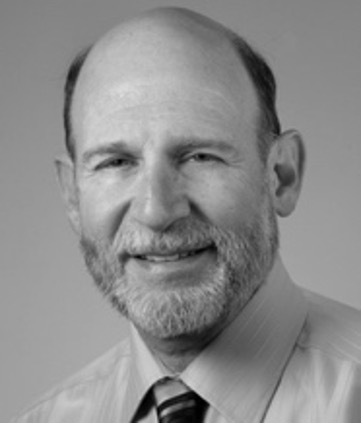
Jerry Danoff has been with NIHCO for over 20 years, (including the Bethesda Brass Ensemble auxiliary). Over the past 30 years he has played in the pit for many of the community theater groups in the Washington, DC area, and he fronted a Klezmer band (the Kleztones) and the Cabin John Dixieland Band. He currently arranges music and leads the Beth El Simcha Band.

Hon-Cheong Chan combines musical artistry with technical expertise as a pianist and violinist, alongside a professional background in IT and web technologies. He began studying piano at the age of seven in Malaysia and later earned a Bachelor of Music in Piano Performance and a Master of Science in Information Systems. He has performed with several local orchestras, including the Montgomery Philharmonic, NIH Community Orchestra, and Capital City Symphony, and has appeared at venues such as Strathmore Mansion and The Lyceum. Professionally, he supports digital marketing technologies at an alternative asset management firm. This performance is dedicated to his parents.
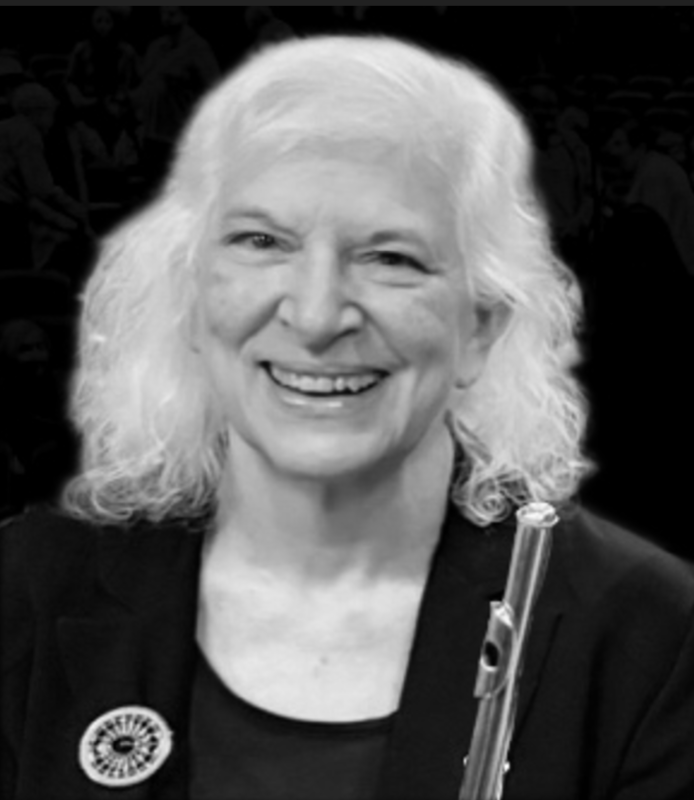
Ellen Ensel approaches music-making as a lifelong learning experience, beginning with studying the flute in third grade. Pursuing her love of music and learning, she earned a bachelor’s degree in flute performance, a master’s in musicology and a master’s in library and information science. She plays concert flute and piccolo with the NIH Community Orchestra, Montgomery Symphony Orchestra, Takoma Park Community Band, and alto flute with DCFlutes. A retired librarian/knowledge manager, Ellen sits on the board of a private foundation focused on peace and community-building, and participates in civic engagement. For this performance, she created her own cadenza.